Insight
Are you building memories or just wasting time?
Do you know why Cadbury spent 8 years trying to trademark their distinctive shade of purple, or why BP tried to do the same with their green across more than 20 countries?
A bit of theory - Byron Sharp will tell you that brands grow by increasing their physical and mental availability, mental availability being how easily your brand comes to mind in a buying situation. Mental availability can be created by linking your brand to category entry points - the situations and moments that bring people into the category, and by owning distinctive assets (colours, shapes, sounds, phrases etc) that act as cues for people to think about your brand.
So, Cadbury and BP were trying to protect the association they’d spent years creating between their brand and a distinctive brand asset, namely a colour. Some of the most creative advertising you can see is from the dying days of tobacco advertising in F1, when cigarette brands weren’t allowed to use their names or logos so were left with brand colours and outline shapes to try to keep the link between their brands and motorsport.
Now be honest. The last time you created a marketing strategy or a communications plan, how much emphasis did you put on getting your brand to stick in people’s memories?
Getting people to build memories associated with your brand isn’t easy, but one way to approach it can be found in ‘The Power of Moments’ by Chip and Dan Heath. They state that we don’t remember events in a linear way, we remember them based on their highest or lowest point, and how they end. Like the average hotel in LA that’s ranked number 2 in reviews due in large part to the Popsicle Hotline at the poolside. Armed with this, they explain several ways you can go about creating these powerful ‘moments’ or peaks.
The problem is that most marketing is built for frequency rather than peaks. Frequency without peaks creates familiarity, but not powerful memories that make your brand front-of-mind. Digital is superb at frequency. Through social and emails you can regularly target your audience with a precise message based on something you know about them. But can you remember a great social ad you saw? How many times have you shown a colleague an email from a brand and said “Wow, look at this!”?
Memories are made when we have an emotional peak, so marketers should be deliberately creating these peaks. Something worth bearing in mind when you’re doing this – physical touchpoints (face to face contact, real life connections, physical assets) have a greater chance of being noticed, being engaged with and being remembered.
In the work we do at The Foundry, we see 3 immediate applications:
Events
An event is a manufactured peak. For many brands, it’s the only place prospective buyers can meet them, short of the moment of purchase itself. Through our work with Raccoon Media Group on the ISPO show and others, we’re seeing first-hand how successful brands don’t just rock up with trestle tables, pull up banners and an order book. They see it as a chance to build an emotional peak and create mental associations with their audience in a way that’s not possible anywhere else.
Communications
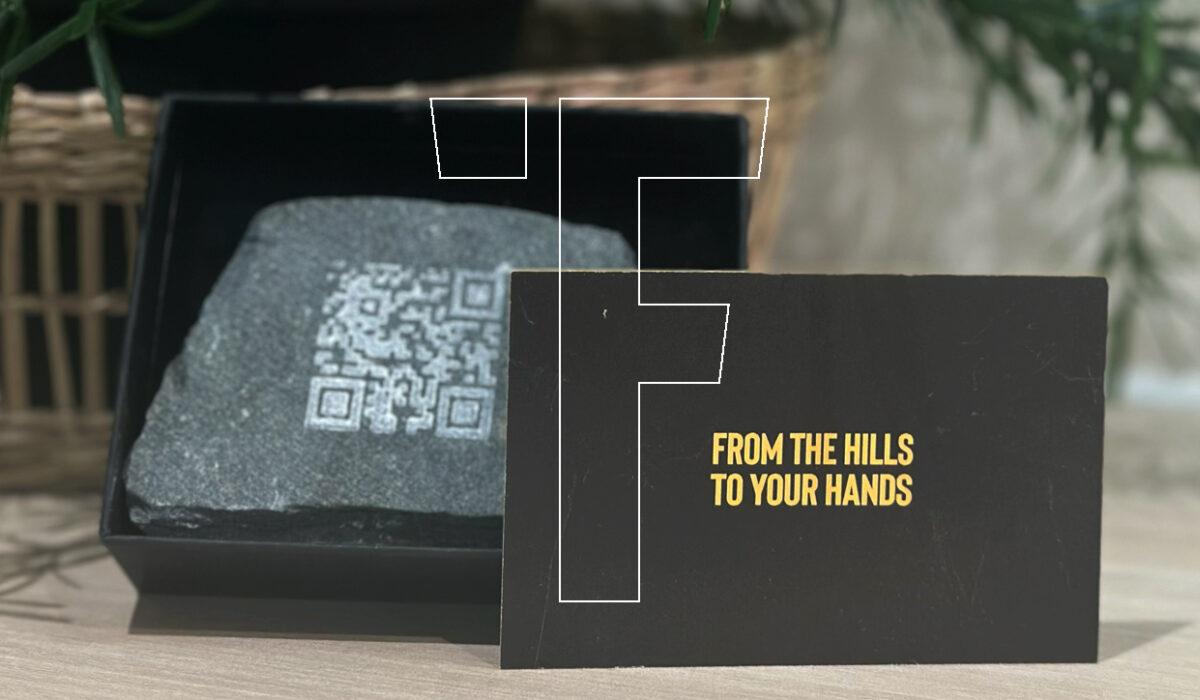
Whilst Direct Mail can be seen as old fashioned compared to email, it can still have a role to play when used correctly. Focusing on a truth about the audience delivered in a creative way can be amplified if done physically and not digitally. Patagonia still sends out print brochures, and sees this as a way to better tell the story of the brand. It demonstrates care and attention, and gives space to tell a deeper story that you can’t easily do (or that doesn’t stand out) in digital channels. It’s the reason that some brands are bringing back their print brochures (like Anthropologie and J. Crew). It’s also why, when we wanted to reach outdoor brands at an outdoor show where they wouldn’t have time to speak to a new agency, we handed them a piece of slate and not a business card or a flyer. Think about the medium being part of the message.
Strategic Planning
Events and Communications are focused on reaching your buying audiences. But the same thinking applies internally when you're developing a new strategy. The hardest part of new strategy isn't writing it. It's overcoming apathy and inertia when you come to roll it out, and a strategy that only ever exists as a deck has no peak. Nobody remembers it, so nobody defends it. For large-scale internal projects, we always recommend face-to-face strategic sessions where we actively involve stakeholders from across the business. The session itself becomes the peak: an energetic afternoon in a room that people remember and rally around. It means they're invested in the solution and become advocates of it at launch, rather than ignoring it. Instead of sitting and listening to someone tell them what's going to happen, they've enjoyed helping to shape it, and they leave feeling they have a stake in its success.
So, as a marketer, ask yourself this: where are your peaks? If you're not sure, or you know exactly where they should be and can't get there, that's a conversation I'd enjoy having. Please send me an email james.kay@thisisthefoundry.com