Insight
Does the world really need another podcast?
Probably not.
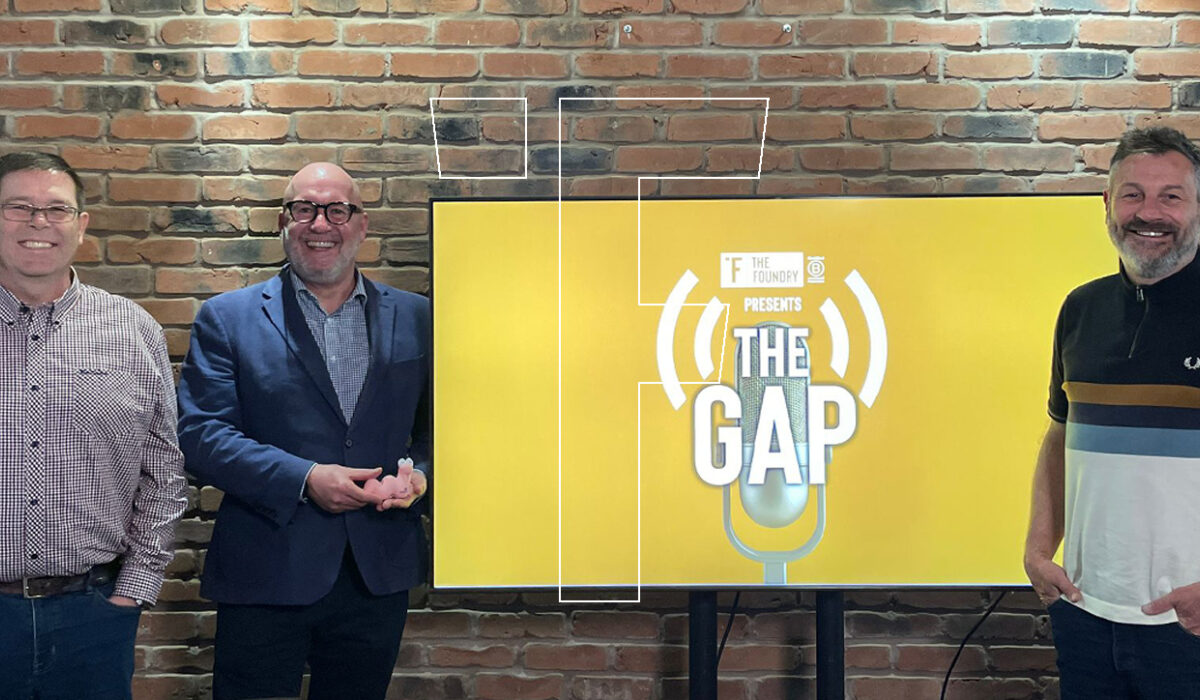
That was one of the first questions we asked ourselves when we began talking seriously about creating The Gap, our new podcast exploring the space between healthcare innovation and real world impact.
Podcasts are everywhere. Starting another one simply because everyone else has one did not feel like a good enough reason. We needed a genuine perspective, something useful to say, and a format that added depth rather than more noise.
The idea had been circling for quite a while. Being based at MediaCity meant we had brilliant recording facilities right on our doorstep, so there was also an element of curiosity involved. We wanted to understand what it actually takes to create a podcast, not just talk about it from the sidelines.
As an agency, that mattered.
Should one of our clients decide that a podcast could play a useful role in their communications, we wanted to be able to advise them from experience. We wanted to understand the planning, the recording, the editing, the distribution and, perhaps most importantly, the work involved in turning one conversation into something people might genuinely choose to spend time with.
So rather than continue talking about making a podcast, we made one.
Finding a reason to speak
The Gap grew from conversations we were already having with our healthcare consultant, Tim Holmes.
We felt there was an important discussion to be had about healthcare communications, innovation and the distance that often exists between a good idea and its impact in the real world.
Not necessarily strong opinions for the sake of having strong opinions, but a clear point of view.
There are difficult questions worth asking. There are accepted ways of doing things that deserve to be challenged. There is value in holding a mirror up to a sector, provided it is done constructively and with an understanding of the realities people are working within.
A podcast felt like the right place to start that conversation.
Unlike a campaign, an advert or a social post, it gives a subject room to breathe. It allows people to explore the detail, follow a line of thought and hear the nuances that are often lost when everything has to be compressed into a headline.
It also fits around the listener. They can choose when to engage, whether that is during a commute, a walk, a drive or half an hour between meetings. It asks for attention, but it does not dictate the circumstances in which that attention must be given.
That felt particularly valuable for a subject as complex as healthcare.
Getting comfortable with being uncomfortable
For our first episode, I was joined by Tim and Ian Parkinson-Sykes, who already knew each other and had worked together previously.
That familiarity was important.
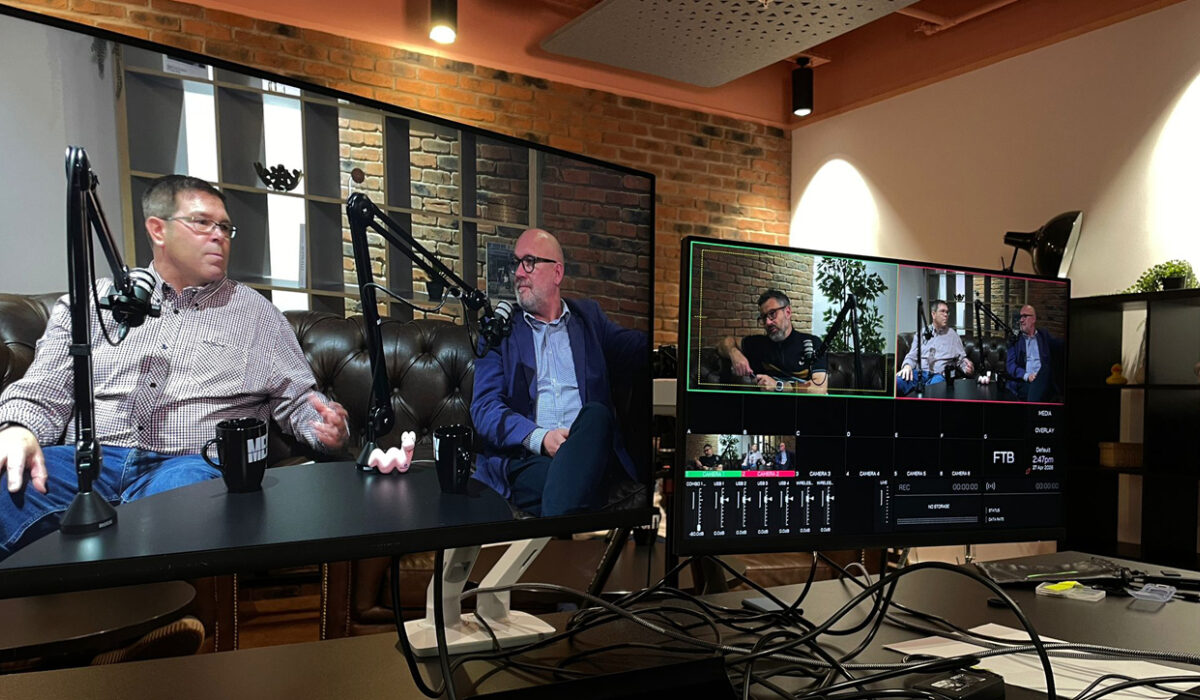
We wanted the conversation to feel natural, not like three people taking turns to deliver prepared answers. I had a bank of questions and played the role of interviewer to an extent, but my real job was to curate the discussion and keep it moving.
There was no script.
We knew the broad areas we wanted to explore, but we did not know exactly where the conversation would go. Nor did we know where the most interesting moments would appear.
That carried a certain amount of risk. There was always a possibility that we would record for an hour and discover that nothing particularly compelling had emerged.
There was also the more personal challenge of doing something completely outside my comfort zone.
I am used to helping other people communicate. Sitting in front of cameras and microphones and being responsible for leading the conversation felt very different.
But that was also part of the point.
It is healthy to put yourself in situations that make you slightly nervous. You learn more when the outcome is not completely predictable.
Once we started recording, most of the concerns disappeared. Tim and Ian were relaxed, the conversation flowed, and the questions became prompts rather than a rigid structure.
The part I had expected to be difficult turned out to be relatively straightforward.
The recording was the easy bit
Beforehand, I assumed the biggest challenge would be the session itself.
Would we have enough to talk about? Would it feel clunky? Would people become self-conscious? Would I run out of useful questions? Would the conversation sound too formal?
In reality, none of those became significant problems.
We had planned carefully, but not over planned. We recorded for more than an hour and did not need to remove a huge amount. The discussion had a natural shape and the people involved had enough knowledge, experience and chemistry to carry it.
The more demanding part came afterwards.
Choosing a hosting and distribution platform required research. The recording had to be edited and reviewed. The audio and video versions had to be prepared. Artwork, descriptions and supporting material had to be created. The podcast then had to be distributed across the various listening platforms and presented consistently.
Then came the question of how we would encourage people to find it.
Producing the episode was only the beginning. We also needed to identify the moments within the conversation that could work as shorter pieces of content.
We reviewed the recording ourselves and also used AI tools to help identify potentially interesting sections. The aim was not to manufacture hooks that were never there, but to find the strongest moments within a natural conversation.
Fortunately, they existed.
Those shorter clips became an important part of the launch, giving people a way into the longer discussion and allowing us to use the original recording across social content and outreach.
It was a useful reminder that the value of a podcast is not contained only within the finished episode. A good recording can become a much broader bank of content, but extracting that value takes time and thought.
What worked
Keeping the first conversation unscripted was the right decision.
We had structure, but not so much structure that it killed the spontaneity. The guests knew each other, which helped create an easy rhythm. The MediaCity studio gave us a professional environment and meant the finished episode looked as good as it sounded.
Recording video as well as audio also gave us far more flexibility afterwards.
Most importantly, the discussion had a genuine purpose. We were not creating content simply to prove that we could create content. There was a subject we cared about and a perspective we wanted to explore.
The response has also been encouraging.
One of the most meaningful signals has not been download numbers or social statistics. It has been the number of interesting people who have expressed an interest in appearing as future guests.
That feels like a valuable proof point. People appear to recognise that there is a worthwhile conversation to join.
What we would change
The first episode was deliberately substantial, but next time I would think differently about the recording model.
Rather than bringing everyone together for a single hour long episode, we may record over half a day and invite several contributors to join us at different points.
Some conversations could overlap. Others could be more focused. Tim and I could provide continuity as hosts, while guests move in and out around specific themes.
From one concentrated recording session, we could then create several shorter episodes alongside a much broader collection of clips, edits and supporting content.
That would make the episodes easier for people to absorb and allow us to explore individual subjects in more depth without asking the listener to commit to a long discussion every time.
It is a more efficient way to use the studio, the guests and the thinking involved.
It is also something we would only have learned by making the first episode.
Learning by doing
Our first experience of podcasting reinforced something we regularly tell clients.
You cannot learn everything from the planning stage.
Research matters. Preparation matters. Having a clear reason for doing something matters enormously. But eventually, you have to put the idea into the world and see what happens.
The Gap is still an experiment. We are learning what works, what people respond to and how the format can evolve.
We do not want it to become contentious simply to attract attention. We do want it to be provocative in the right way.
It should offer a clear perspective, challenge comfortable assumptions and ask questions that are sometimes difficult to answer. It should create space for people working across healthcare to talk honestly about the barriers between innovation, adoption and genuine impact.
Success for us is not simply building the largest possible audience.
It is creating conversations that are worth hearing. It is attracting thoughtful guests who have something meaningful to contribute. It is encouraging people to reflect, respond and perhaps look at their own work slightly differently.
And, from an agency perspective, it means we can now talk to clients about podcasts with the benefit of lived experience.
We know the enjoyable parts, the uncomfortable parts and the considerable amount of work that happens once the microphones have been switched off.
So, does the world need another podcast?
Perhaps not.
But there should always be room for another worthwhile conversation. And you can listen or watch our conversation in episode one of The Gap.
Thinking about launching a podcast?
Whether you're exploring the idea for the first time or looking to make your content work harder, we'd love to help. From shaping the concept and planning the conversation to recording, editing, distribution and creating content around each episode, we can guide you through the whole process.
After all, we've been through it ourselves. We've created our own podcast, learned what works (and what we'd do differently), and know exactly what's needed to bring one together.
If you'd like to explore whether a podcast could work for your organisation, let's start the conversation.